Facelift (Rhytidectomy) in Dubai
“Aging is natural. Looking refreshed is a choice you can make with confidence.”
As we age, the skin loses elasticity, facial fat pads descend, and the underlying muscle layer weakens — producing the familiar signs of sagging jowls, deepened nasolabial folds, and a loss of definition along the jawline. These changes can make a person appear significantly older than their actual age, and no amount of skincare or non-surgical treatment can fully reverse them once structural laxity has set in.
Facial rejuvenation surgery (rhytidectomy) is the gold-standard surgical procedure for rejuvenating the lower two-thirds of the face. By repositioning the deeper tissue layers, removing excess skin, and restoring contour to the jawline and midface, this treatment delivers a visibly younger, naturally refreshed appearance that lasts for years. It is not a one-size-fits-all operation: modern techniques range from a focused mini lift for early signs of aging to a comprehensive deep-plane rhytidectomy that readdresses the entire facial architecture.
Ideal candidates are healthy adults — typically in their forties to seventies — who are bothered by visible sagging but still have reasonable skin elasticity and underlying bone structure. Smoking, uncontrolled medical conditions, and unrealistic expectations are the most common reasons a surgeon may advise against or defer treatment.
The United Arab Emirates has become one of the world’s leading medical tourism destinations for aesthetic surgery, thanks to stringent healthcare regulations, state-of-the-art operating theatres, and a concentration of internationally trained specialists. SurgeryDubai streamlines the process by matching patients with SafePlast-certified facial plastic surgeons who have demonstrated mastery in advanced lifting techniques and a commitment to results that look effortlessly natural.
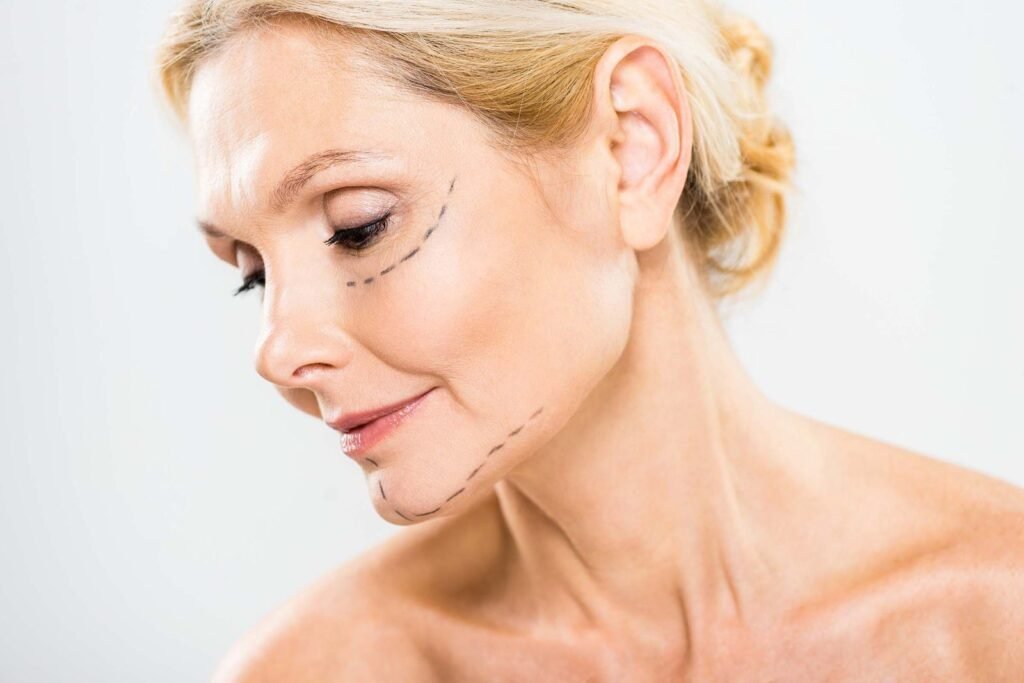
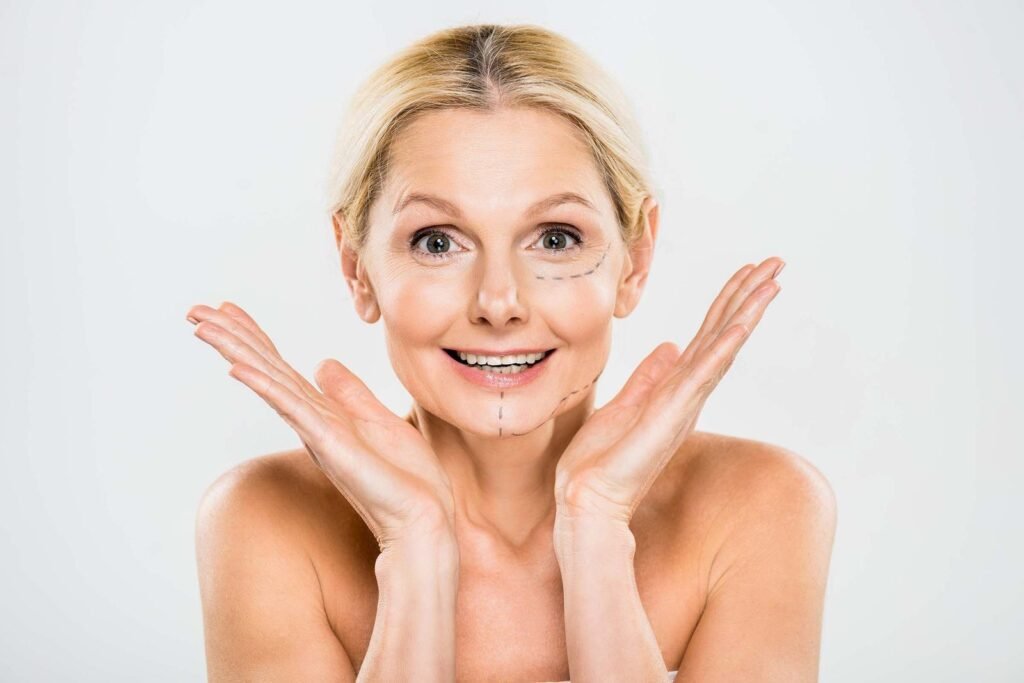
This category of facial procedures encompasses a spectrum of techniques, each designed to address a specific degree of facial aging.
Mini facial lift: Also known as a short-scar lift, this approach targets mild to moderate laxity in the lower face and jowl region. Incisions are shorter — typically confined to the area around the ear — and the procedure focuses on tightening a limited portion of the SMAS layer (the superficial musculoaponeurotic system, a sheet of muscle and connective tissue beneath the skin). Recovery is faster, and many patients return to work within a week or ten days. Results are subtle but meaningful, making this option popular among patients in their forties and early fifties.
Full SMAS lift: The most commonly performed version. Incisions extend from the temples, follow the natural curve in front of the ear, and continue behind the earlobe into the hairline. The SMAS layer is comprehensively lifted, tightened, and re-suspended, producing more significant and longer-lasting improvement across the midface, jawline, and neck. This technique is well suited to patients with moderate to advanced sagging.
Deep-plane rhytidectomy: The most extensive approach, reserved for patients with substantial volume loss and deep tissue descent. Instead of separating the skin from the SMAS and lifting each layer independently, the surgeon mobilises a composite flap that includes skin, SMAS, and the deeper facial fat pads as a single unit. This produces a more natural, longer-lasting result because the tension is distributed across deeper structures rather than pulling tightly on the skin surface. Recovery is longer, but outcomes are considered the gold standard in facial rejuvenation surgery.
Modern techniques tighten deep tissues — not just skin — for results that look refreshed, not pulled.
Addresses jowls, nasolabial folds, marionette lines, and neck laxity in one procedure.
Incisions hidden in the hairline and natural creases around the ears.
Results typically last 8–15 years, making facelift one of the most enduring procedures.
After anaesthesia is administered, the surgical team preps and drapes the face. Incisions are made according to the chosen technique — beginning at the temple, curving in front of the ear, and extending behind the earlobe into the hair-bearing scalp. The surgeon then carefully lifts the skin flap to expose the underlying SMAS layer.
Working on the deeper tissue, the surgeon tightens the SMAS using internal sutures, repositions descended fat pads to restore youthful cheek volume, and defines the jawline by removing jowl tissue. Once the deep structures are secured, excess skin is trimmed away and the remaining skin is redraped without tension — a critical step that prevents the stretched, windblown look patients worry about. The incisions are closed with fine sutures, and a supportive compression garment is placed.
For patients combining their facial procedure with complementary treatments — such as neck contouring, eyelid surgery, or fat grafting — these additional steps are seamlessly incorporated into the same operative session. Total surgical time ranges from two to five hours, depending on the complexity and scope of the plan.
Days 1–3: Your face will be wrapped in a gentle compression dressing, and thin drains may be placed behind each ear to prevent fluid accumulation. Swelling and bruising are at their peak during this period. Keeping your head elevated above heart level and resting quietly are essential for minimising inflammation.
Days 4–7: Drains are usually removed by day four or five. Bruising transitions from dark purple to lighter yellowish-green tones. Most of the external dressing is replaced with a lighter support garment that you can wear discreetly under loose clothing.
Weeks 2–4: Sutures (or clips) are removed. Social activities can be resumed, and camouflage makeup effectively conceals any residual discolouration. You will notice a marked improvement, though residual swelling — especially around the jawline — may persist for several more weeks.
Weeks 6–12: Swelling fully resolves, and the final contour becomes visible. Incision scars continue to mature, gradually fading from pink to a barely perceptible fine line. By three months, most patients feel their results look entirely natural and consistent with their overall appearance.
Your surgery begins with a final review of the operative plan and the application of anaesthesia — general anaesthesia is standard for most facial lifting procedures, though some surgeons offer local anaesthesia with sedation for limited-scope operations.
Once you are comfortably anaesthetised, the surgeon creates incisions along the pre-planned lines: typically within the temple hairline, in front of and behind the ear, and into the posterior scalp. Through these incisions, the skin is gently elevated to expose the SMAS — a fibromuscular layer that provides the structural foundation of the face. The SMAS is then sutured and lifted to a higher, more youthful position on each side.
After the deep layers are secured, the surgeon evaluates the skin redraping. Only the skin that cannot be smoothly repositioned is excised; the remainder is carefully closed without tension. This approach ensures that scars remain thin and well hidden within natural creases. Fat grafting or fillers may be added to restore volume in the cheeks or temples, and neck contouring may be performed simultaneously for a harmonious result. The entire procedure takes three to five hours.



Lorem ipsum dolor sit amet, consectetur adipiscing elit. Ut elit tellus, luctus nec ullamcorper mattis, pulvinar dapibus leo.
How much does a facelift cost?
Facial rejuvenation surgery pricing is influenced by several key variables: the technique selected (mini, SMAS, or deep-plane), the surgeon’s training and reputation, the accreditation level of the surgical facility, and whether complementary procedures are included in the operative plan. Patients who add eyelid surgery, neck contouring, or autologous fat grafting should budget accordingly. In the UAE market, costs typically range from AED 30,000 to AED 80,000+, with deep-plane procedures and combined surgeries occupying the upper end of that range. Your matched specialist will provide a fully itemised quote covering the surgeon’s fee, anaesthesia, operating theatre, overnight stay (if required), and all post-operative follow-up visits — ensuring complete transparency with no surprise charges.
Recovery Timeline
Sagging skin and deepened folds do not have to dictate how you feel about your reflection. A carefully planned facial procedure performed by a skilled specialist can restore the firm, defined contours of youth while preserving the unique character that makes your face recognisable. The difference between a satisfactory outcome and a truly exceptional one often comes down to surgeon selection — and that is where SurgeryDubai adds genuine value. Through a free matching service, you are connected with SafePlast-certified surgeons who have passed rigorous safety and quality benchmarks. Take the next step towards a naturally rejuvenated appearance — request your personalised match today and begin your journey with confidence.