Rhinoplasty in Dubai
“A well-shaped nose brings harmony to every other feature on your face.”
The nose occupies the centre of the face, and even subtle disproportions — a prominent dorsal hump, a wide bridge, a bulbous tip, or asymmetrical nostrils — can disrupt the overall balance of your features. Beyond aesthetics, structural issues such as a deviated septum or narrowed airway can cause chronic congestion, difficulty breathing during sleep, and reduced exercise tolerance.
Nasal reshaping surgery is one of the most commonly performed and technically demanding procedures in aesthetic medicine. It addresses both form and function: refining the external shape for improved facial harmony while simultaneously correcting internal obstructions that impair airflow. Whether the goal is a dramatic transformation or a subtle refinement, the best results come from a surgeon who understands not just the anatomy of the nose but the principles of facial proportion and ethnic identity.
Good candidates include adults of any background who are in good general health, have fully developed nasal anatomy (typically by age 16–18), and hold realistic expectations about what surgery can achieve. A thorough pre-operative consultation — often including digital imaging — helps clarify the surgical plan and ensures both patient and surgeon share the same vision.
The UAE is home to an exceptional concentration of facial plastic surgeons, many of whom have completed fellowships at leading international institutions. SurgeryDubai removes the guesswork from surgeon selection by matching you with SafePlast-certified specialists known for delivering beautiful, functional outcomes with meticulous attention to detail.
Surgical approaches to nasal refinement are broadly categorised into two main groups, with additional sub-specialisation for specific concerns.
Open (external) approach: A small incision is made across the columella — the narrow strip of tissue between the nostrils — in addition to incisions inside the nostrils. This provides the surgeon with direct, unhindered visualisation of the entire nasal framework, making it the preferred method for complex reshaping, significant tip modification, or revision cases. The external scar typically heals to a nearly invisible fine line within a few months.
Closed (endonasal) approach: All incisions are placed inside the nostrils, meaning there is zero visible scarring. This technique is well suited to straightforward cases — such as dorsal hump reduction or minor tip refinement — where the required changes can be achieved through limited access. Recovery is slightly faster, and post-operative swelling tends to resolve sooner.
Additional focus areas: Tip refinement isolates adjustments to the lower third of the nose, ideal for patients satisfied with their bridge but unhappy with a bulbous, drooping, or asymmetrical tip. Septoplasty corrects a deviated septum to restore normal breathing. Ethnic nose surgery preserves the patient’s cultural characteristics while enhancing proportion — an approach that requires particular sensitivity and skill.
Results that complement your facial proportions — not a cookie-cutter nose.
Functional rhinoplasty can correct septal deviation and airway obstruction.
Closed technique leaves no visible scars. Open technique scars are nearly invisible.
Permanent reshaping of bone and cartilage for a lifetime of confidence.
On the day of your operation, you will check in at the surgical facility after having fasted overnight (or for a minimum of six hours). The anaesthetist will review your medical history and administer general anaesthesia, ensuring you are fully comfortable and unaware throughout the procedure.
Once anaesthesia is confirmed, the surgeon begins by making the planned incisions — either the external columellar incision (open approach) or internal nostril incisions (closed approach). Through these access points, the skin and soft tissue are gently elevated to expose the underlying framework of bone and cartilage.
Using precision instruments, the surgeon sculpts the nasal framework: shaving down a prominent dorsal hump, narrowing a wide bridge by in-fracturing the nasal bones, refining the tip cartilages with sutures or strategic removal, and adding structural grafts where additional support is needed. If functional correction is being performed, the deviated septum is straightened and turbinates may be reduced to improve airflow. Once the reshaping is complete, the soft tissues are redraped and incisions are closed with fine, dissolving sutures. A carefully moulded splint is applied to the exterior of the nose to maintain the new shape during the initial healing phase. The entire procedure typically takes one and a half to three hours.
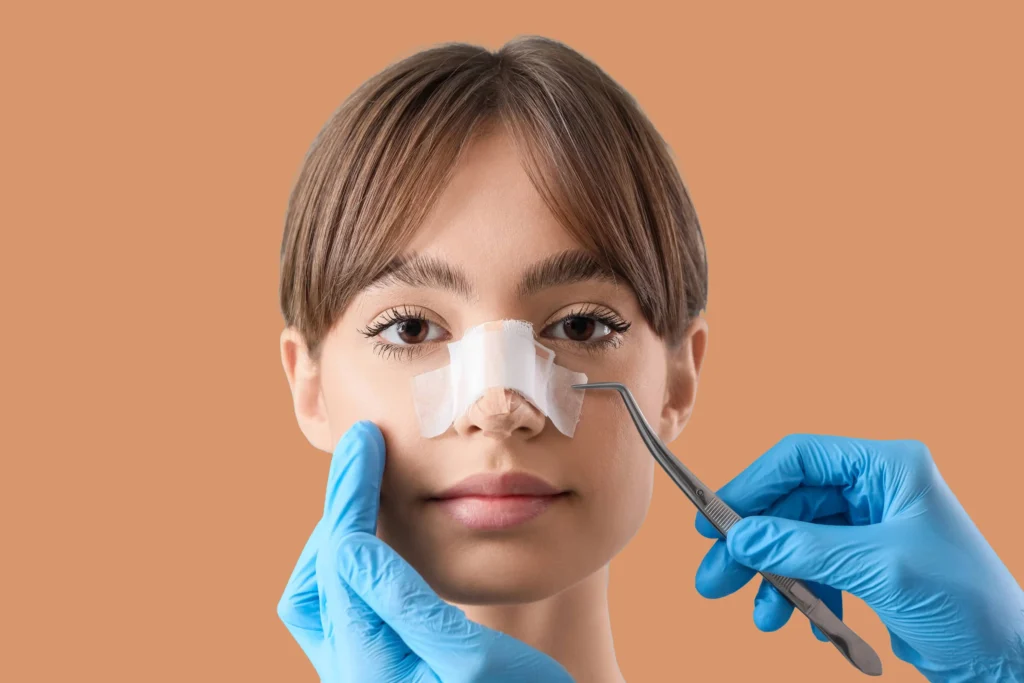
Days 1–3: You will wear an external nasal splint and may have internal packing (dissolvable in most modern practices). Swelling and bruising around the eyes and upper cheeks are at their peak. Keeping your head elevated and applying cold compresses helps significantly. Breathing through the mouth is common initially.
Days 4–7: Bruising fades noticeably, transitioning to yellow-green tones. The external splint is typically removed around day seven, revealing the early shape of your new nose — though significant swelling remains, especially in the tip. Most internal packing dissolves or is removed by this stage, and nasal breathing improves.
Weeks 2–4: You can return to most non-physical work and light social activities. Residual swelling is easily managed and largely unnoticeable to others. Light exercise (walking, gentle yoga) resumes around week three. Eyeglasses should not rest on the nasal bridge for at least six weeks to avoid altering the healing shape.
Months 3–12: The final contour gradually emerges as lingering subcutaneous swelling resolves. The nasal tip is the last area to settle, often requiring a full year to reach its definitive shape. Throughout this period, regular follow-up visits allow the surgeon to monitor progress and address any concerns.
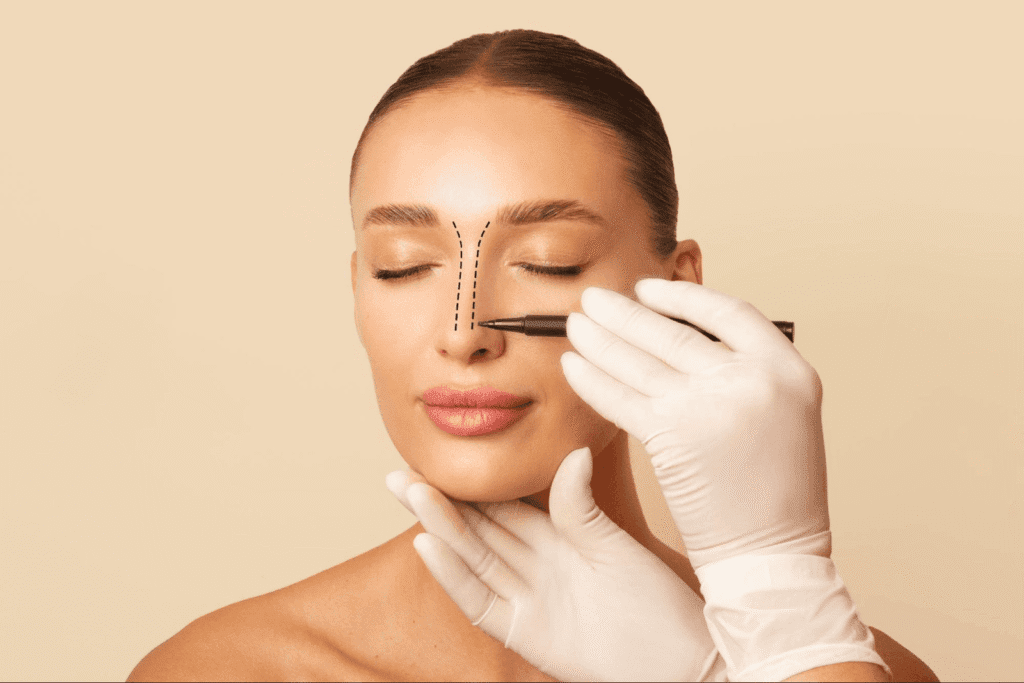
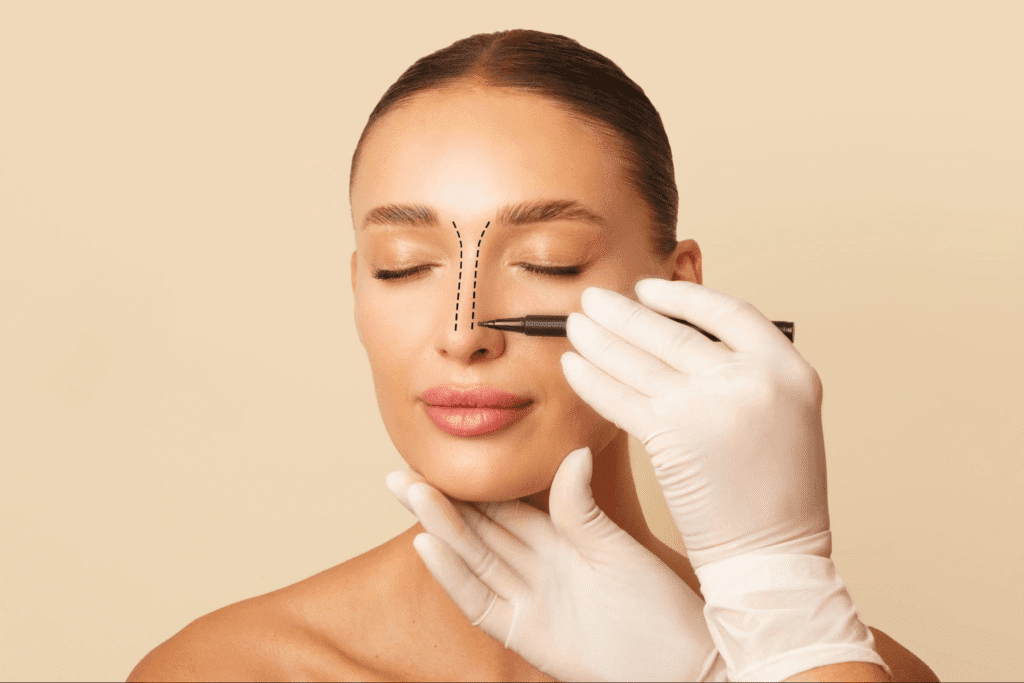
The operative sequence begins with anaesthesia — typically general anaesthesia for maximum patient comfort and a still surgical field. Once you are fully asleep, the surgeon marks reference points on the nose and creates the incisions according to the planned approach.
Through the chosen access points, a carefully planned dissection lifts the nasal skin envelope from the underlying bone and cartilage skeleton. The surgeon then sculpts the framework: a prominent dorsal hump is reduced using a rasp or osteotome; a wide bridge is narrowed by precisely fracturing and repositioning the nasal bones; tip cartilages are refined with suturing, resection, or reshaping techniques tailored to the patient’s anatomy.
In cases requiring additional structural support — such as revision surgery, significant tip projection, or ethnic refinement — cartilage grafts harvested from the nasal septum, ear, or rib are meticulously carved and positioned to reinforce weak areas and create a stable, durable framework. Once the reshaping is complete, the skin is redraped, incisions are closed, and a splint is applied. Surgical time ranges from one and a half to three hours, depending on the scope of work.
How much does rhinoplasty cost?
Nasal surgery is among the most complex procedures in aesthetic medicine, and pricing reflects the skill and precision it demands. Factors influencing cost include whether the operation is a primary procedure or a revision (which is substantially more demanding), the surgical approach chosen (open vs. closed), the need for cartilage grafting, and whether functional correction of a breathing issue is combined with aesthetic reshaping. Surgeon experience and facility accreditation also play significant roles. In the UAE, fees typically range from AED 20,000 to AED 55,000, with revision cases and complex multi-component surgeries at the higher end. Your matched specialist provides a detailed, itemised quote during consultation so you can make a fully informed decision with no financial surprises.
Recovery Timeline
Your nose is the defining feature at the centre of your face — and when its shape or function falls short of your expectations, the impact on your confidence can be profound. Whether you are seeking to smooth a dorsal hump, refine an asymmetrical tip, or finally breathe freely through both nostrils, choosing the right surgeon is the single most important decision you will make. SurgeryDubai connects you directly with SafePlast-certified specialists who combine world-class technical training with an artistic understanding of facial harmony. The matching service is free, confidential, and carries no obligation. Request your personalised surgeon match today and take the first step towards a nose that looks and functions exactly as it should.