Surgical Scars: Understanding, Managing, and Minimizing Them
Every surgical incision leaves a scar—it is the body’s natural way of repairing wounded tissue. However, the visibility and quality of that scar depends on many factors, including surgical technique, wound care, genetics, and post-operative management. At Surgery Dubai, our surgeons use meticulous techniques to minimize scarring, and we offer advanced scar management treatments to help existing scars fade as much as possible.
How Scars Form
When the skin is cut, the body initiates a complex healing cascade. Fibroblasts produce collagen to bridge the wound gap, new blood vessels form to supply oxygen and nutrients, and the wound edges gradually contract and close. The resulting scar tissue differs from normal skin—it lacks hair follicles, sweat glands, and the organized collagen basket-weave pattern of uninjured skin. Initially, scars are red and raised due to increased blood flow and collagen production. Over 6-18 months, they typically flatten, soften, and fade toward your natural skin tone.
Types of Surgical Scars
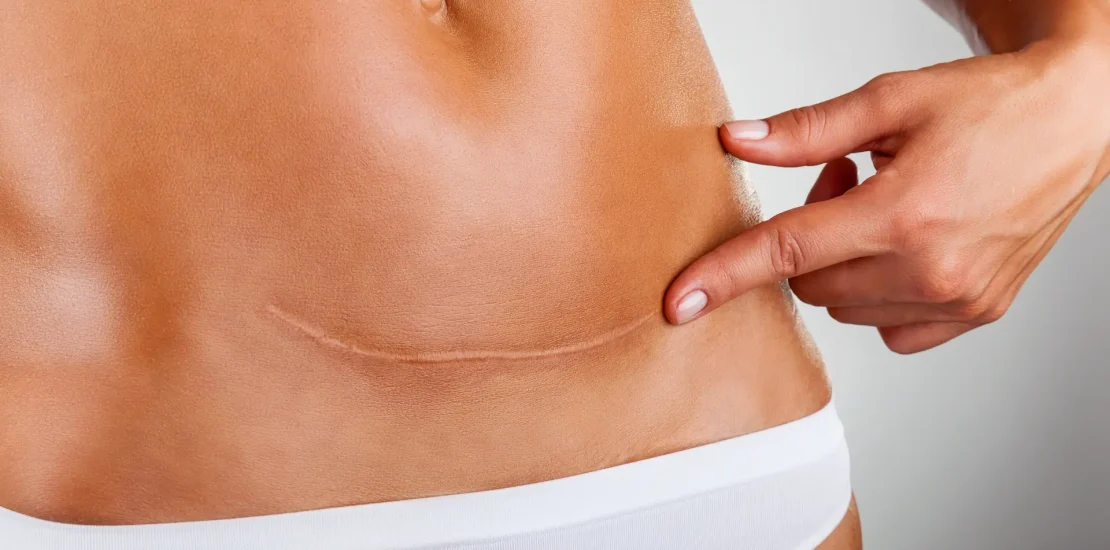
Fine Line Scars
Most well-healed surgical incisions become fine line scars—flat, pale lines that are narrow and relatively inconspicuous. These are the expected outcome when surgical technique is meticulous and wound healing proceeds normally.
Hypertrophic Scars
These scars remain within the boundaries of the original incision but are raised, red, and thicker than normal. They result from excessive collagen production during healing and are more common in areas of tension (chest, shoulders, back). Hypertrophic scars may improve on their own over 1-2 years, but treatment can speed improvement.
Keloid Scars
Keloids extend beyond the original wound edges, forming raised, firm, often itchy or painful growths. They are more common in darker skin tones (Fitzpatrick types IV-VI), which is particularly relevant in Dubai’s diverse population. Keloids can develop months after surgery and do not regress without treatment. They have a genetic component—if you have formed keloids before, you are at higher risk.
Atrophic Scars
Less common after surgery, atrophic scars appear sunken or depressed, resulting from inadequate collagen production during healing. They can occur after procedures that remove tissue (excision of large cysts, some laser treatments).
Surgical Techniques That Minimize Scarring
The quality of your scar begins in the operating room. At Surgery Dubai, our surgeons employ techniques proven to produce better cosmetic outcomes:
- Strategic incision placement — wherever possible, incisions are placed within natural skin creases (Langer’s lines), along hairlines, or in concealed locations
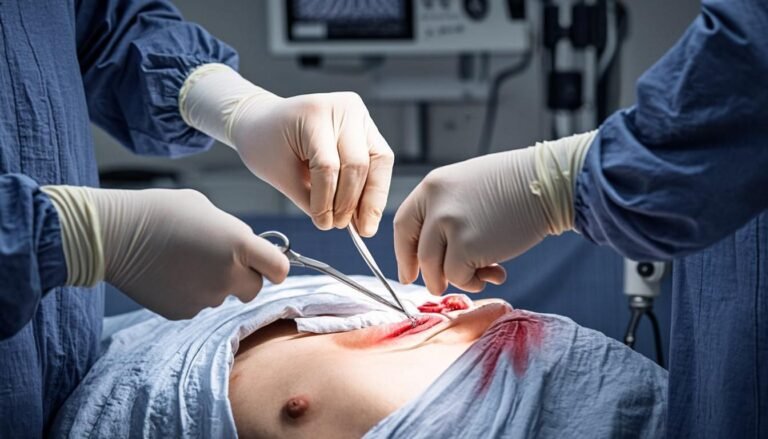
- Tension-free closure — deep sutures bear the wound tension, allowing the skin surface to close without pulling forces that widen scars
- Fine suturing technique — using fine, non-reactive suture material and precise tissue approximation minimizes the inflammatory response that drives excessive scarring
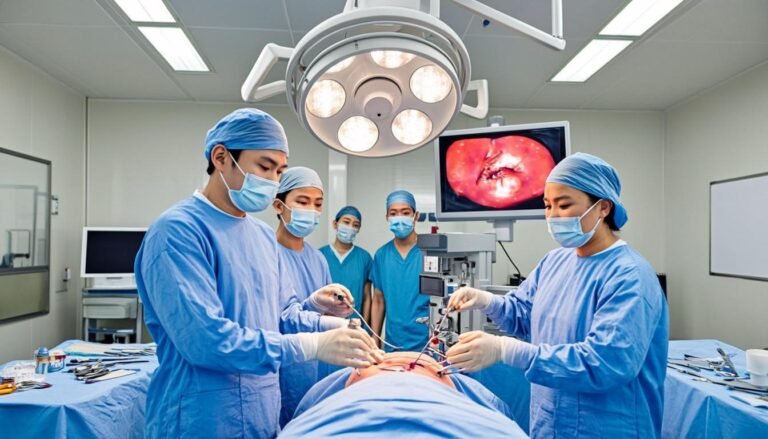
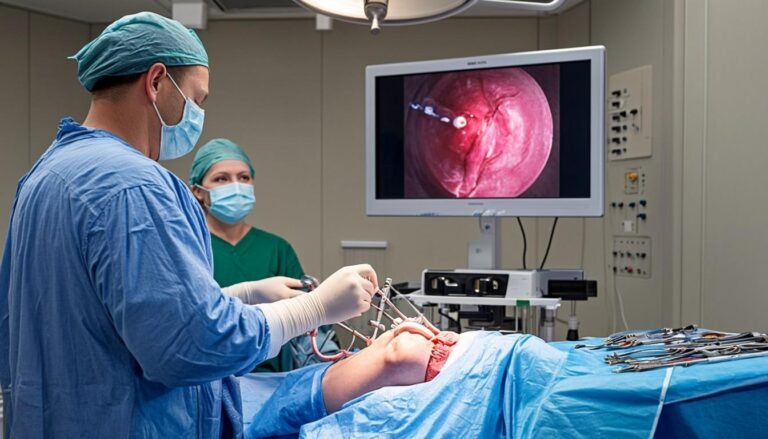
- Minimally invasive approaches — laparoscopic and robotic procedures use small port incisions (5-12 mm) that produce far less visible scarring than open surgery
- Subcuticular closure — running the suture just beneath the skin surface eliminates the cross-hatching marks of traditional sutures
Post-Operative Scar Management
First 2 Weeks: Protect the Healing Wound
Keep the wound clean and dry, follow your surgeon’s dressing instructions, and avoid any activity that pulls on the incision. Do not apply any creams, oils, or scar treatments until the wound is fully closed and epithelialized (typically 10-14 days).
Weeks 2-6: Begin Scar Care
Once the wound is fully closed, begin daily silicone gel or silicone sheet application. Silicone is the most evidence-based scar treatment available—it hydrates the scar surface, regulates collagen production, and has been shown in multiple clinical trials to improve scar color, thickness, and texture. Apply consistently for at least 2-3 months, ideally 6-12 months.
Months 2-12: Optimize and Treat
Continue silicone therapy. Begin gentle scar massage for 5-10 minutes daily—use circular motions with moderate pressure to break down collagen bundles. Protect the scar from sun exposure with SPF 50+ sunscreen—UV radiation causes permanent darkening of new scars. Consider additional treatments if the scar is not improving as expected.
Advanced Scar Treatments Available in Dubai
Laser Therapy
Fractional CO2 lasers and pulsed dye lasers can improve scar texture, redness, and thickness. Multiple sessions (3-6) spaced 4-6 weeks apart are typically needed. Laser treatment is particularly effective for hypertrophic scars and atrophic scars.
Steroid Injections
Intralesional corticosteroid injections (triamcinolone) are the first-line treatment for hypertrophic and keloid scars. Injections are given every 4-6 weeks for 3-5 sessions and can significantly flatten and soften raised scars.
Surgical Scar Revision
For wide, misaligned, or poorly healed scars, surgical revision removes the old scar and re-closes the wound using meticulous technique. This is best performed once the scar has matured (at least 6-12 months after the original surgery). Revision is particularly effective for scars that healed with excess tension or poor alignment.
Cost of Scar Treatments in Dubai
- Silicone gel/sheets: AED 100 – AED 300 (over the counter)
- Laser scar treatment (per session): AED 1,000 – AED 3,000
- Steroid injection (per session): AED 500 – AED 1,500
- Surgical scar revision: AED 3,000 – AED 15,000 (depends on size and location)
Realistic Expectations
No treatment can eliminate a scar completely—the goal is to make it as inconspicuous as possible. Most fine line scars become barely noticeable within 12-18 months with good care. At Surgery Dubai, we provide comprehensive scar management from the day of surgery through complete maturation. Contact us to discuss scar treatment options for your specific situation.